
Fantasy and Fiction: What’s coming our way in the near to distant future?
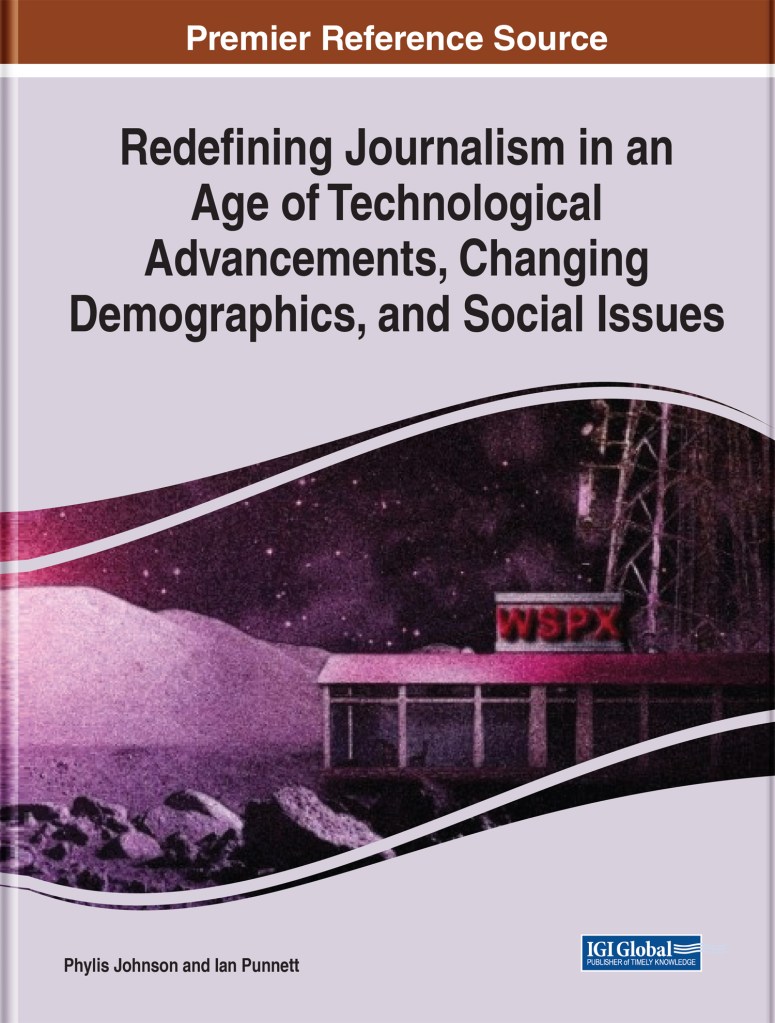
I recently co-edited a book with too long of a title about the future of journalism (and media more generally) with Dr. Ian Punnett, professor of practice at Kansas State University, who currently guest hosts talk radio show Coast-to-Coast AM from his professional home studio when he is not writing or professing. The abbreviated title is Redefining Journalism and the long one, well it wasn’t ideal. It was some kind of scientific word soup formula derived by our publisher to reach our target audience, hopefully YOU.
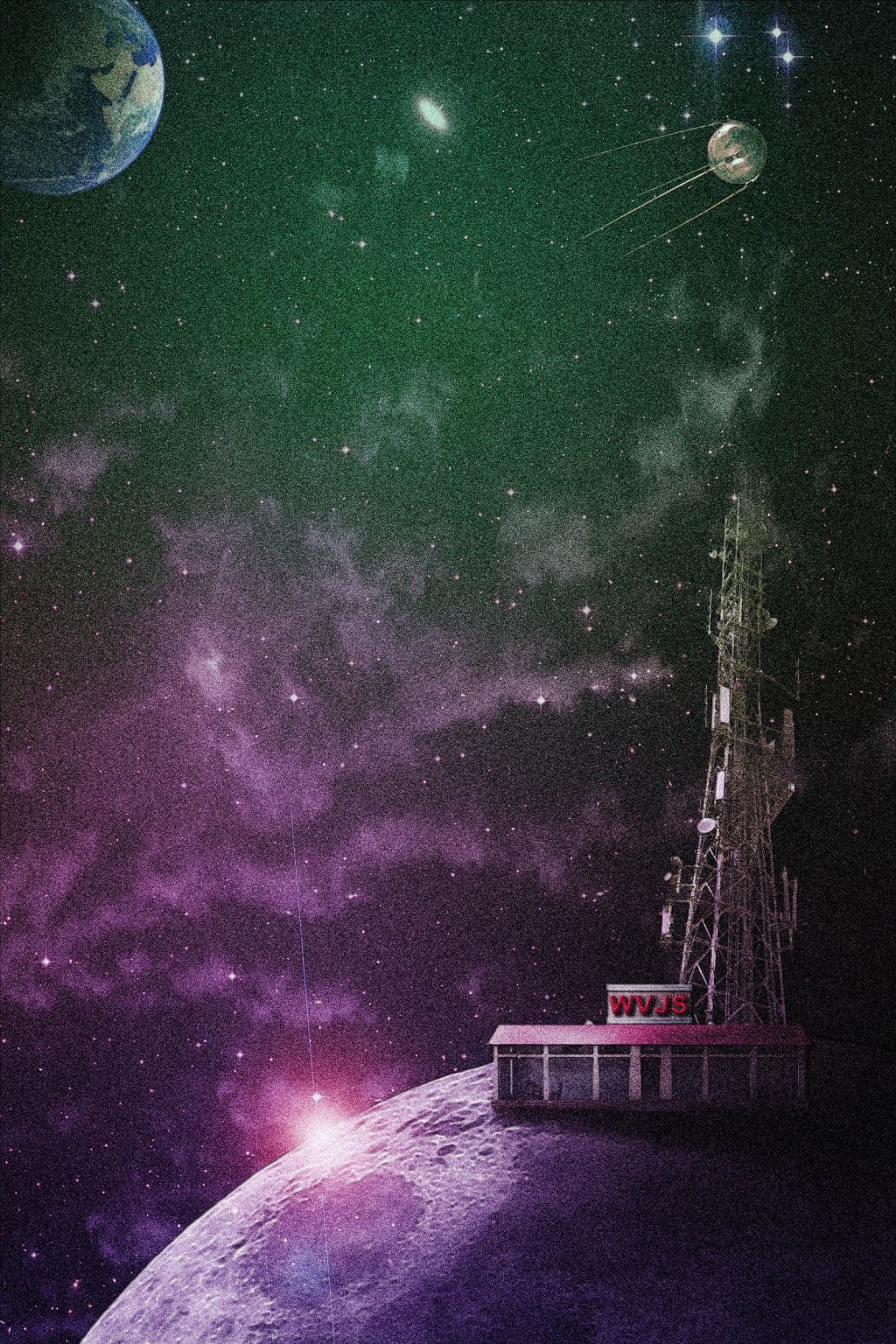
And the cover art of a radio tower was inspired by recent space missions. Note the call letters on this extraterrestrial landscape, more commonly referred to as the Moon. The idea for this book was inspired by the rapid technological changes and social issues that have arisen in the last several years. This book is intended as a guide through the future of journalism as well as media more generally.
We invited several industry and academic experts to imagine life in 2040 and beyond to the next century. A couple of big themes center on technology’s impact on an increasingly diverse society. College students entering college will face a completely different world than they are being trained for presently. This book leads you through a series of topics, discussing the facts and tech trends and highlighting our vision for the future. The topics span from how science fiction has influenced these trends to new ways of experiencing daily life. There is a plethora of things to share with you.
As you sip your coffee before you head off to work just know some tech company is tweaking its next idea on how to transform the workplace and your leisure time. Most of us ignore all the signs of the changing times because we are absorbed in our busy life. I hope that I can open your mind to the new realities that are coming your way. This book also introduces you to the rise of more than virtual worlds, which encompass what is becoming known as the Metaverse (a term mistakenly attributed to Facebook founder Mark Zuckerberg. There are many these days. The larger meaning of the Metaverse is perhaps more synonymous with the concept of a virtual universe. Some of the early founders like entrepreneur/physicist Philip Rosedale, founder of Second LIfe, High Fidelity and similar immersive world experiences, have a vision of our future that is comparable to Matrix and Oasis (Ready, Player One).
This book begins by forecasting what is moving quickly as we approach 2030, and then looks toward what might likely happen 2040 to 2070, and then beyond to the next century.

We have researched our topics thoroughly. Yet, we anticipate many to question our ability to predict the future. You may fault how we envision society and technology. We acknowledge that they could be a multitude of outcomes. We try to cover as many reasonable scenarios as possible in this book, yet we do not apologize for what might seem far-reaching conclusions. As you read our book, keep in mind that Arthur Clark’s Profiles of the Future (1973) and his other works guided how we envisioned the future. In essence, one must push just a bit past the limits of the possible into the impossible to peer into the future. The magic of prophesy is the ability to contextualize a number of impending variables across many scenarios; or simply the ability to see the reality and the consequences beyond the smoke and mirrors.
Clarke, Arthur C. (1973). Profiles of the Future: An Inquiry into the Limits of the Possible.
My next project will shift toward how women envision the Metaverse and how it will shape our future.


Leave a comment